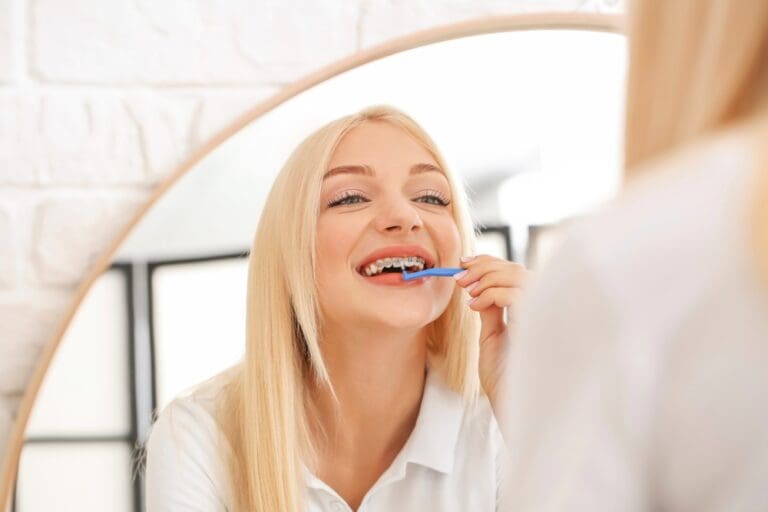

Braces glue is bonded straight to your enamel, so getting it off safely is a job for your orthodontist’s office, not a bathroom mirror.
Taking your braces off is a milestone you have worked toward for months, maybe years. But that first day, your teeth can feel rough in a way that catches you off guard.
How to get braces glue off teeth is best handled by your orthodontist rather than with DIY methods. Braces glue does not wash off with brushing, and it should never be picked at with sharp tools at home. At Holt Orthodontics in Twinsburg, OH, adhesive removal happens the same visit your brackets come off, using tools built to protect your enamel while getting every trace of glue smooth. Scraping, picking, or trying acidic home remedies on leftover glue risks permanent enamel damage. Enamel does not grow back, which is why this step belongs to your orthodontic team.
Dr. Shalise Holt, DDS, MS, treats residual-glue removal as a careful, deliberate part of every debonding visit at Holt Orthodontics in Twinsburg, OH, not a rushed afterthought.
The office’s stated priority is enamel protection first: a close visual inspection, gentle removal with dedicated dental tools, then a full polish before a patient leaves the chair.
What Is Braces Glue, and Why Won’t It Just Wash Away?
Braces glue is a special kind of dental bond. Your doctor uses it to stick metal or ceramic brackets to your tooth enamel, and it has to be strong enough to survive months or years of chewing, brushing, and adjustments without letting a single bracket loosen.
Because it sticks so well, it does not simply rinse off once the brackets come out. Some glue residue almost always stays on the tooth surface after debonding. If that residue is not cleaned the right way, it can lead to scratches or enamel damage, which is why the removal process uses professional tools designed to smooth the tooth without harming the layer underneath.
Why DIY Removal Is Risky for Your Enamel
It might be tempting to try removing leftover glue yourself once you notice a rough patch. But home attempts carry real risk to your enamel, and the risk shows up in a few specific ways.
Enamel Damage and Scratches
Using sharp things like pins or your fingernails is one of the more common mistakes people make, and it is also one of the most serious. These tools can leave scratches on your teeth that weaken the tooth surface and make it easier for stains and plaque to build up. Once enamel is gone, it does not grow back.
Tooth Sensitivity and Pain
Scraping too hard can thin your enamel, and thin enamel means sensitivity. Teeth that have lost protective enamel tend to hurt when you eat something hot or cold. Damage from a DIY attempt can end up costing far more to fix later than a routine office visit would have cost in the first place.
Leftover Glue and Stains
Simple brushing will not remove all the glue residue on its own. Even when your teeth feel smooth, small spots of adhesive can remain. Those spots trap food and bacteria, which raises the risk of cavities, and over time they can also cause discoloration that keeps your smile from looking its best.
What Not to Do After Your Braces Come Off
After debonding, your teeth need a little patience while the office finishes the job. A few common home habits should be avoided entirely.
Do not use metal or sharp tools. Picking at glue with metal or sharp objects can scratch and permanently damage your enamel. Even wooden or household tools can cause harm if too much pressure is used. It is safest to let your orthodontic office handle the proper instruments.
Avoid acidic home tricks. Some people suggest lemon juice, vinegar, or a thick baking soda paste. None of these are good ideas. Acids wear away tooth enamel, and a rough baking soda paste can act like sandpaper and cause scratches. Dr. Fiona Shi, a doctor referenced in the practice’s original guidance, cautions that tricks like these can cause lasting tooth pain.
Skip strong whitening right away. Teeth are often more sensitive right after an appointment, so it is best to avoid strong whitening treatments or strips for a few weeks. A gentle whitening toothpaste is fine in the meantime, but save the deeper bleaching treatments until your enamel has settled.
DIY Removal vs. Professional Removal
| DIY Removal at Home | Professional Removal at Holt Orthodontics | |
| Tools typically used | Fingernails, pins, sharp picks, acidic pastes | Dedicated dental tools built specifically for adhesive removal, plus polishing paste |
| Risk to enamel | High. Enamel that is scratched away does not grow back | Low. Trained hands use tools designed to protect the tooth surface |
| Effectiveness | Often leaves adhesive remnants behind even after heavy scrubbing | Removes visible glue residue and smooths the tooth surface completely |
| Recommended? | No | Yes |
When a Home Fix Isn’t the Right Call
A few situations are worth a call to the office rather than waiting it out or reaching for a tool at home.
- Your braces are still on, and glue feels loose around a bracket. Picking at it yourself risks breaking the bracket loose, which can mean an unplanned visit and a longer treatment timeline.
- A rough patch shows up days after your braces come off. This happens occasionally and is not an emergency, but it is also not something to scrape at. A short office visit resolves it.
- Sensitivity lingers longer than a few days. Mild sensitivity after glue removal is normal at first, but if it does not ease up, that is worth mentioning to your orthodontic team.
- You are eager to whiten right away. Waiting a few weeks protects the result. If you are not sure when it is safe to start, ask at your visit instead of guessing.
What a Consultation Can (and Can’t) Tell You
A visit to Holt Orthodontics can confirm whether your teeth and bite are ready for your braces to come off, give you a full exam of your enamel, and walk you through what the debonding appointment and aftercare will look like. It is also the right place to ask about the timeline for whitening treatments down the road.
What a consultation cannot do is remove adhesive that has already cured onto your teeth without the proper appointment and tools, and it cannot undo scratches or sensitivity from a DIY attempt that has already happened. If you have questions before your appointment or want to flag a concern, the practice’s Contact Us page is the fastest way to reach the team directly.
How Holt Orthodontics Removes Braces Glue, Step by Step
At Holt Orthodontics in Twinsburg, OH, glue removal follows the same careful sequence for every patient.
Step 1: A Close Look
First, the team checks every tooth, looking for glue residue that is hard to see and feeling the tooth surface for any rough spots. Special lighting and tools help spot adhesive remnants that might not be visible at first glance, which helps plan the safest way to smooth each tooth.
Step 2: Gentle Adhesive Removal
Dedicated dental tools, designed specifically for adhesive removal and not sharp, gently lift and remove leftover adhesive without damaging the enamel surface underneath. This careful technique keeps the risk of scratches or long-term damage very low.
Step 3: Polishing for a Smooth Finish
Once the larger residue is removed, the team polishes using a gentle paste and a soft dental tool to smooth the tooth surface. This step catches the tiny leftover spots that are hard to see and leaves teeth feeling smooth and looking naturally shiny.
Caring for Your Teeth After Glue Removal
Once you leave your appointment, a good aftercare routine keeps your results looking their best.
Brush the right way. Use a soft brush and fluoride toothpaste, with gentle, round motions rather than heavy scrubbing. Fluoride helps strengthen enamel, and brushing at least twice a day protects the smooth finish from your debonding visit.
Flossing is key. With the wires gone, you can finally reach every spot between your teeth. Daily flossing clears out food, helps stop plaque buildup, and keeps your gums healthy.
Use a fluoride mouthwash. A fluoride mouthwash coats the teeth, helps stop cavities, and can ease any lingering sensitivity. According to Dr. Annika Freelove, a dedicated pediatric dentist in Sammamish, WA, making fluoride mouthwash part of your daily routine is one of the easiest ways to protect your teeth going forward.
Try a saltwater rinse. If your gums feel a bit red or sore, mix a little salt into warm water and swish for about 30 seconds before spitting it out. It is a simple, natural way to soothe irritation while your mouth adjusts.
Long-Term Oral Health and Success
Good maintenance is what keeps your results looking good for years, whether your treatment involved braces, Invisalign, or another kind of personalized orthodontic care.
- Keep a daily routine: brush and floss every single day.
- See your dentist: go for a professional cleaning twice a year so they can remove stains you cannot reach on your own.
- Watch what you eat: calcium-rich foods like milk and cheese support enamel health, while sugary drinks are worth limiting.
Frequently Asked Questions
Does braces glue weaken over time?
Braces glue, or orthodontic adhesive, is designed to stay strong throughout your entire treatment and does not normally weaken on its own under normal eating and brushing habits. Very hard, sticky, or crunchy foods can loosen a bracket over time, but when braces are professionally removed, your orthodontist uses tools built to safely break the adhesive bond without damaging your enamel.
Does toothpaste remove superglue?
No, toothpaste does not effectively remove superglue. Toothpaste is only mildly abrasive and is meant for cleaning plaque and stains, not dissolving strong adhesives. If superglue ever gets on your teeth, do not try to scrape it off. Contact a dental professional instead.
How permanent is dental glue?
Dental glue is not permanent, but it is built to be strong and long-lasting for its purpose. Braces adhesive can hold brackets in place for 12 to 24 months, and other dental cements may last weeks or years depending on how they are used. All of it can be safely removed by a dental professional when the time comes.
Can I ask my orthodontist to remove leftover glue if I notice it after my braces are already off?
Yes. It is not unusual for a small rough spot to turn up once your mouth has settled after debonding. Rather than picking at it at home, a quick call to the office and a short follow-up visit is the safe way to have it checked and, if needed, polished away.
Is it safe to whiten my teeth right after my braces come off?
It is best to wait. Teeth are often more sensitive right after glue removal, so strong whitening treatments or strips can make that sensitivity worse. A gentle whitening toothpaste is fine in the meantime, and it is worth asking your orthodontist when a deeper whitening treatment is safe to start.

Related Reading
Ready for a Smooth, Glue-Free Smile in Twinsburg?
At Holt Orthodontics, a consultation with Dr. Shalise Holt, DDS, MS covers a full exam of your teeth and a clear walk-through of what your debonding appointment and aftercare will look like.
Schedule Your Free Consultation
Free consultation for new patients in Twinsburg, OH.